Against the Requirement Specification, you have made the following design to guide your implementation of the prototype. In respect wtih the two phases specified by KitchenwareCity, your program also consists of two components; Information Gathering Component and Information Presenting Component.
The first thing in the program will be two arrays, one for the list of products (namely PRODUCT_LIST in this document) and the other for the corresponding prices (namely PRICE_LIST). Thus, a product item and its price will have exactly the same index in the respecting arrays. (Hint: there is no need for an array to store the Product Codes. They can be just the index in PRODUCT_LIST .)
Task 1 - Information Gathering Component (Functional Requirement 2, 3, 4)
You first need to create two arrays; one (namely orderedProductCodeArr) to store the Product Code of ordered items; the other to store the quantity of ordered item (namely quantityArr). Just like PRODUCT_LIST and PRICE_LIST, an ordered item's Product Code and quantity will be stored at exactly the same index in the respecting arrays. A diagram defining the relationships between PRODUCT_LIST, PRICE_LIST, orderedProductCodeArr, and quantityArr has been drawn in Figure 1.
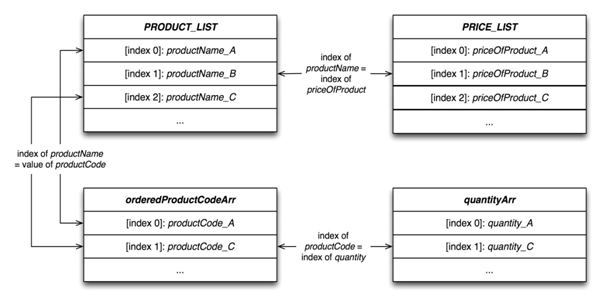
Figure 1: Relationship Diagram for Arrays
Subtask 1.1 - Pseudocode for Information Gathering Component
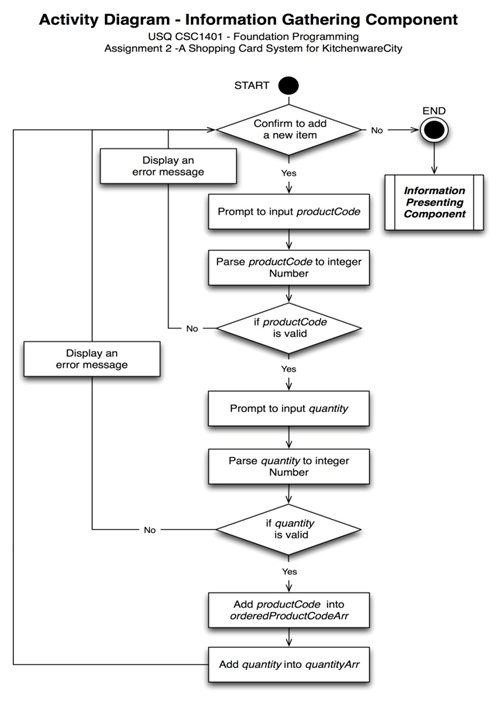
Information Gathering Component is very important to a shopping cart system. You really want to develop a good algorithm for it. As a professional practice, you decided to first make a working plan in pseudocode before putting hands on coding implementation for the Information Gathering component. After the consultation with an experienced software engineer, you have obtained an Activity Diagram (Figure 2). Now lets decipher the flowchart and input the pseudocode as multi-line comments into the program to guide implementation.
Figure 2: Activity Diagram for Information Gathering Component
Subtask 1.2 - Implementation of Information Gathering Component
Based on the pseudocode developed in Subtask 1.1, you are to implement the Information Gathering Component in this task.
Subtask 1.3 - Duplicate Order Detection [Challenging task for only extensive study, no extra mark gained. You can skip the task if you like]
KitchenwareCity will appreciate it if an extra feature can be delivered to detect duplicate orders. If an ordered item has already been in the cart, the system should detect the case, and then ask for user confirmation for updating the quantity or not. If the user confirms 'Yes', the stored quantity will then be replaced by the newly entered value; otherwise, the program terminates the current product-adding process and loop back to ask user confirmation for adding a new item or not. Note that the user is not allowed to completely remove an ordered item from the shopping cart.
Task 2 - Information Presenting Component (Functional Requirement 5, 6)
Subtask 2.1 - Calculating the Total Cost Amount
Your program needs to be able to calculate the total amount of all ordered items in the shopping cart. The calculation can be completed in either of two different ways;
1. Accumulate the amount of each order immediately after the items being added into the cart. For that you need to retrieve the price of a product item from PRICE_LIST in order to calculate the amount by price*quantity. (Hint: A product item and its price have exactly the same index in the respecting arrays.) In this case, the calculation will need to be implemented in the Information Gathering Component; OR
2. After completion of the Information Gathering Phase, in a loop you can visit each of the Product Codes stored in orderedProductCodeArr in order to get the index for the corresponding price in PRICE_LIST. You then access to quantityArr to retrieve the quantity. With the calculation of price*quantity, you can accumulate the amount for total orders. In this case, the calculation is implemented after the Information Gathering Component.
Subtask 2.2 - Finding the Most Expensive Product Item in the Shopping Cart
Your program needs to be able to find the most expensive product item in the shopping cart. To do that, for each of the ordered items you need to firstly retrieve the corresponding price from PRICE_LIST, and then compare the prices one by one. Once you find out the most expensive price, the corresponding product item in PRODUCT_LIST will be the most expensive product item in the shopping cart.
Similarly, you can implement this feature either in or after the Information Gathering Component.
Subtask 2.3 - Finding the Cheapest Product Item in the Shopping Cart
Your program needs to be able to find the cheapest product item in the shopping cart. For it you may adopt the same strategy described in Subtask 2.2.
Subtask 2.4 - Calculating Average Cost Per Unit
Your program needs to be able to calculate the average cost per unit for the ordered product items in the shopping cart. This can be done by total cost divided by the accumulated value of quantities. Note that the program needs to handle "Division by Zero" exception. Only two digits after decimal point are required in display of the calculated average value.
Subtask 2.5 - Presenting the Order Information on a Table
To a table on HTML, your program needs to print out the detailed order information including product name, price, quantity, and cost. You may adopt an iteration plan to visit the elements stored in quantityArr and orderedProductCodeArr in order to get the index to retrieve the product names and prices from PRODUCT_LIST and PRICE_LIST.
Subtask 2.6 - Presenting the Statistic Information on an Unordered List [0 Mark, but it will reflect the result of Subtask 2.1-2.4]
Your program needs to print out the statistic information (total cost, the most expensive item, the cheapest item, and the average cost per unit for the ordered product items) to an unordered list on HTML, following the same format illustrated in Figure 3.