What Role Do Hormones Play in Breast Cancer Treatment?
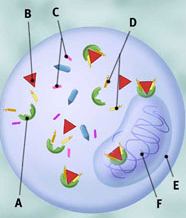
Hormone receptors are like ears or antennae on a cell. Estrogen sends signals through the receptors that tell breast cancer cells to grow. Cells with estrogen receptors grow and multiply when estrogen attaches to the receptors.
After a breast cancer is removed, the cancer cells are tested to see if they have hormone receptors. If either estrogen or progesterone receptors are present, a response to hormonal therapy is very possible. The more estrogen or progesterone receptors present on those cells, the more likely that hormonal therapy will work against the particular cancer. If high levels of both estrogen and progesterone receptors are present, an even greater response to hormonal therapy is likely.
The other name for hormonal therapy is "anti-estrogen therapy." The goal of therapy is to starve the breast cancer cells of the hormone they thrive on, which is estrogen.
What percentages of breast cancers have hormone receptors?
• About 75% of breast cancers are estrogen-receptor-positive ("ER-positive" or "ER+").
• About 65% of ER-positive breast cancers are also progesterone-receptor-positive ("PR-positive" or "PR+").
• About 25% of breast cancers are ER-negative ("ER-") and PR-negative ("PR-") or of "unknown" status.
• About 10% of breast cancers are ER-positive and PR-negative.
• About 5% of breast cancers are ER-negative and PR-positive.
• If cells have receptors for both hormones OR receptors for one of the two hormones, the cancer is consider hormone-receptor-positive.
In this context, "positive" means that a significant number of cancer cells have receptors in them. "Negative" means that the cells do not have significant numbers of receptors.
The definition of "significant" varies from one hospital or testing center to another. If 5-10% or more of the cells have hormone receptors, that's usually reported as a positive result. But if a report says "negative" or "borderline," it's still important to look at HOW positive the level is. For example, the laboratory may label a 5% level of being positive for hormone receptors as "negative," but even cancers at that level may have a good response to hormonal therapy.
Sometimes, a report will come back from the laboratory saying that the hormone status is "unknown." This may mean one of several things:
• The test was never ordered or done.
• The sample of tissue that the laboratory received was too small to get reliable results.
• Few estrogen and progesterone receptors were present.
If there are no hormone receptors present, or they cannot be measured or seen, or the status is "unknown," the cancer is called hormone-receptor-negative.
How do the hormones work?
Estrogen and progesterone travel through the bloodstream and find their matching receptor sites on both healthy cells and cancer cells. Receptors are very specialized protein molecules that sit on the outside or inside of the cells in your body. They act like an on-off switch for a particular activity in the cell. If the right substance comes along that fits into the receptor-like a key fitting into a lock-the switch is turned on and a particular activity in the cell begins.
Many breast cancers are hormone-dependent-which means that estrogen and progesterone stimulate their growth by "turning on" hormone receptors in the cancer cells. Without these hormones, the cancer cells are not stimulated to grow. They wither, and eventually they may die.
Estrogen and progesterone play roles in the development of certain breast cancers:
• Estrogen is a very important "key" for the estrogen-receptor (ER) sites throughout the body AND on some breast cancer cells
• Progesterone receptors (PR) can also be involved in turning on breast cancer cell growth
When a cancer shows few or no estrogen receptors (when it is "ER-negative,") hormonal therapy is usually not effective. But if there ARE progesterone receptors, hormonal therapy may sometimes be helpful anyway. Women whose cancers are PR-positive but ER-negative have about a 10% chance of responding to hormonal therapy. If you have an ER-negative breast cancer, you and your doctor should discuss whether the possible benefits of hormonal therapy are worth exploring for YOU.
How will you respond to hormonal therapy?
If hormone receptors are present in your breast cancer cells, you will probably have a good response to hormonal therapy. The more receptors, the better your response:
• If both estrogen and progesterone receptors are present (ER+/PR+), your chance of responding to hormonal therapy is about 70%.
• If you are estrogen-receptor-positive only (ER+/PR-) OR progesterone-receptor-positive only (ER-/PR+), you have about a 33% chance of responding.
• If the receptor status is unknown, there is about an overall 10% chance of responding.
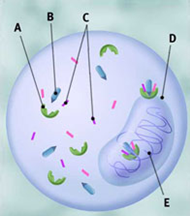
Cell with estrogen receptors, estrogen, and helper proteins
Estrogen has many different functions; including helping you develop dense, strong bones. It's good to have strong bones (and other good things that estrogen helps to provide, like lower cholesterol and a sense of well-being), but it's best not to have the breast-cell growth stimulation that goes along with the higher estrogen levels.
Some studies have shown that elderly women with high bone mineral density (strong bones) have an increased risk of breast cancer, particularly advanced cancer. This has led to rumors about dense breasts and dense bones causing breast cancer. But it's not the extra thickness of the breasts or the thickness of the bones that causes an increased risk of breast cancer. Relatively high estrogen levels in the body probably produce all three things: denser breasts, stronger bones, AND a higher risk of breast cancer. Cell with estrogen receptors blocked by tamoxifen and helper protein