Exercise: Drag and Applications
The first part of this week's assignment is to revisit our reciprocating engine powered (i.e. propeller type) aircraft from last week.
1. Selected Aircraft (from last week's module):
Make sure to review your data and results from last week and any feedback that you may have received on your work, in order to prevent continuing with faulty data.
2. Main Wing Airfoil type & on-line database designator (from last week's module):
3. Aircraft Maximum Gross Weight [lbs] (from last week's module):
4. Wing Span [ft] (from last week's module):
5. Average Chord Length [ft] (from last week's module):
6. Wing Area ‘S' [ft2] (from last week's module):
7. Find the Aspect Ratio ‘AR' for your selected aircraft wing. (Use the wing span and average chord length from last week's module/from above. See also page 63 in your textbook.):
8. CLmax for your airfoil (from last week's module):
9. Standard sea level Stall Speed ‘Vs' for your aircraft [kts] (from last week's calculation):
Find the appropriate drag polar curve for your airfoil selection (2. above; from last week's module). You can utilize any officially published airfoil diagram for your selected airfoil or use again the Airfoil Tool
10. From the polar plot, find the CDmin value for your airfoil, i.e. the lowest value that the coefficient of drag ‘Cd' (bottom scale in the online tool depiction) reaches. (Tip: for a numerical breakdown of the plotted curve, you can again select the "Details" link and directly read the lowest CD value in the table - third column, labeled "CD"):
What we've just found (...with some degree of simplification...) is the parasite drag coefficient for our airfoil, i.e. the drag that exists due to skin friction and the shape of our airfoil, even when little or no lift is produced. However, this value will only represent the airfoil, i.e. main wing portion of our aircraft; therefore, let us for the remainder of our calculations assume that our aircraft is a Flying Wing type design and the total CDP for the aircraft is the same as the CDmin that we've just found.
Let us also assume that we are at standard sea level atmospheric conditions and that our wing has an efficiency factor of e = 0.82.
A. Prepare and complete the following table for your aircraft (with the data from 1. through 8. above). Start your first row with the Stall Speed ‘Vs' (from 7. above) and start the second row from the top with the next higher full twenty knots above that stall speed. Then increase speed with every subsequent row by another 20 knots until reaching 300 kts. You are again encouraged to utilize MS® Excel as shown in the tutorial video and can also increase your table detail. However, the below depicted, and above described, interval is the minimum required for this assignment.
Answer the following questions from your table.
I) Determine the minimum total drag ‘Dmin' [lbs] (i.e. the minimum value in the total drag ‘DT' column):
II) Determine the airspeed at which this minimum drag occurs ‘VDmin' [kts] (i.e. the speed associated with the row in which ‘Dmin' was found):
III) Compare parasitic ‘DP' and induced ‘DI' drag at VDmin. What is special about this point in your table?
IV) Determine the maximum CL/CD value in your table (i.e. the maximum value in the CL/CD column) and the speed at which it occurs.
V) Compare your results in IV) with II) and comment on your findings.
VI) Explain which values in your table will directly allow glide performance prediction and how (Tip: Reference again the textbook discussion pp. 61-63).
B. If the gross weight of your aircraft is decreased by 10% (e.g. due to fuel burn), how would the stall speed change? Support you answer with calculation as well as written assessment. (Remember, stall speed references and discussions can be found pp. 43-45 in your textbook.)
For the second part of this assignment use the given figure below (Figure 1.13 from Aerodynamics for Naval Aviators [1965]) to answer the following questions. (This assignment is designed to review some of the diagram reading skills required for your midterm exam; therefore, please make sure to fully understand all the diagram information and review book, lecture, and/or tutorials if necessary.):
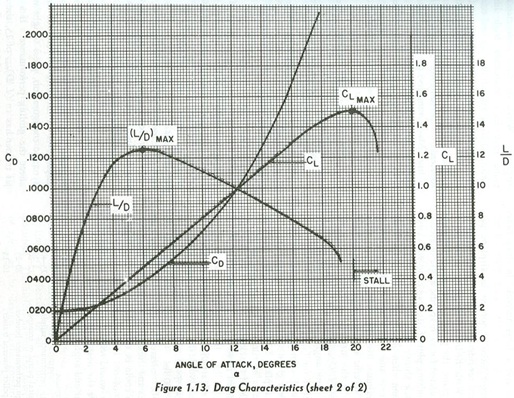
Figure 1.13 from Aerodynamics for Naval Aviators (1965).
C. What is the Angle of Attack at Stall for the aircraft in Figure 1.13?
D. What Angle of Attack is associated with Best L/D?
E. What would be the best Glide Ratio for this aircraft?
F. What is the maximum coefficient of lift (CLmax) value?
Attachment:- Questions.rar