Ask Macroeconomics Expert

Question 1: Short Answers

For the questions below, define the relevant terms and provide examples where necessary. Feel free to use math if that helps you to answer the question. Your answers should not exceed -250 words for each sub-question (a through d).

a. What is choice arbitrariness? How does it relate to utility maximization and a person's search heuristics?

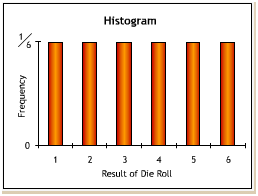
b. Explain the endowment effect and the complexity that surrounds it, as shown by Cartwright (2014) when he examines data from List (2004) (see Figure 1). Why is the endowment effect a problem for what we would predict in standard economic interactions without the endowment effect? (e.g. consider its relationship to willingness to pay or accept and market exchange.) What does List show that investigates some of these ideas for market operations?
613_figure.png

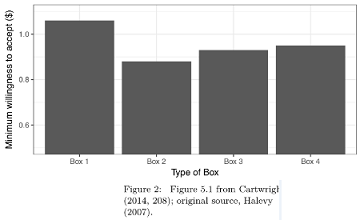
c. What is the Ellsberg paradox? Explain it by reference to Figure 2 from Halevy (2007) (and in your textbook Cartwright (2014)). What problems does the Ellsberg Paradox create for thinking about how people go about updating their beliefs? Why is this a problem for economic decision-making and what theory/theories serves to explain the existence of the paradox? Explain.
1952_figure1.png

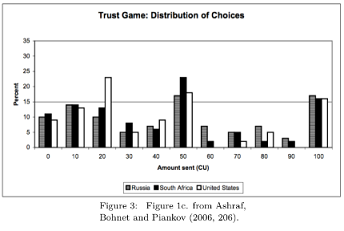
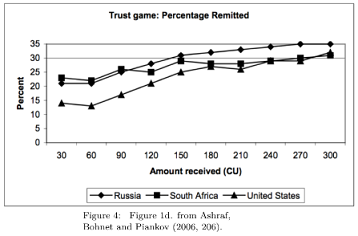
d. What is a trust game experiment? An example of behavior from a trust game in three countries is presented in the Figures 3 and 4 from Ashraf et al. (2006). Comment on the consistency of this observed behavior with standard economic models. What alternative theory/theories serve to explain the behavior?
1685_figure2.png

2279_figure3.png

Question 2 - Consider the paper by Ariely and Wertenbroch (2002) in which the authors investigate the phenomenon of procrastination.

a. What standard economic theory are the authors implicitly testing? Explain the theory and how it works.

b. Consider Figure 5. What are the constituent parts of the experiment and how does it test the theory you explained in a.? What do the results show?

c. What are the alternatives to the theory you explained in a. that are consistent with the evidence presented by Ariely and Werten-broch (2002)? Explain.
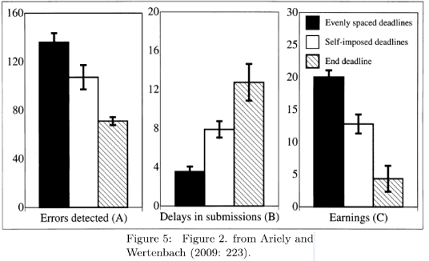
249_figure4.png

Question 3 - For this question, we will use Kube et al. (2012). You can also download the codebook and readme.

a. Explain the research question that the authors try to answer.

b. Describe the experiment and how it tests their research question.

c. Use the data provided to you as a .csv file to reproduce the following elements of the authors' analysis:

i. Figures 2, 3, 4 and 5 (once you have one of the figures, you can simply re-purpose your code to produce most of the others).

ii. The Wilcoxon rank sum (Mann-Whitney) test comparing the productivity between treatments Bottle and Baseline and between treatments Bottle and Money (reported on a 16491 and between Choice and Baselin (reported on p. 1651).

d. Why, as the authors argue, is reciprocity a necessary part of the explanation for what they observe in their experiment?

e. Extra Credit: Reproduce (as close as you can get) Table 2- Regression Results on p. 1654 (not reproduced below). Be sure to use stargazer () if you do in order to make the table as presentable as possible.

Comments on the supplementary files:

  • The codebook explains the different variable name.
  • The ReadMe explains the use of the csv data file (which I renamed for ease)

Tips:

Remember to start by loading the packages you need:

  • library(tidyverse)
  • library(mosaic)

After you import the csv, I would suggest you use mutate() combined with factor() to change the variables time and treatment into factor variables (categorical variables) rather than numeric or character variables in your data, e.g. YourDataFrameName <- YourDataFrameName 70>Y0 mutate(time = factor(time)). This will make your life easier later when you try to draw the plots in ggplot ().

Pay attention to when you need to filter() your data for different samples for the different graphs.

I would recommend that you set up data tables (data frames) that you define with your data wrangling before you try to create your plots.

Attachment:- Assignment File.rar

Macroeconomics, Economics

  • Category:- Macroeconomics
  • Reference No.:- M92530019

Have any Question?


Related Questions in Macroeconomics

Economics assignment -topic evaluation of macroeconomic

Economics Assignment - Topic: Evaluation of Macroeconomic performance of Australia and New Zealand. Task Details: Complete a research-based analysis and evaluation of the relative macroeconomic performance of Australia a ...

Introductory economics assignment -three problem-solving

Introductory Economics Assignment - Three Problem-Solving Questions. Question 1 - Australia and Canada have a free trade agreement in which, Australia exports beef to Canada. a. Draw a graph and use it to explain and ill ...

Question in an effort to move the economy out of a

Question: In an effort to move the economy out of a recession, the federal government would engage in expansionary economic policies. Respond to the following points in your paper on the actions the government would take ...

Question are shareholders residual claimants in a publicly

Question: Are shareholders residual claimants in a publicly traded corporation? Why or why not? In some industries, like hospitals, for-profit producers compete with nonprofit ones. Who is the residual claimant in a nonp ...

Discussion questionsquestion 1 what are the main reasons

Discussion Questions Question 1: What are the main reasons why Nigerians living in extreme poverty? Justify. ( 7) Question 2: Why GDP per capita wouldn't be an accurate measure of the welfare of the average Nigerian? Exp ...

Question according to the definition a perfectly

Question: According to the definition, a perfectly competitive firm cannot affect the market price by any changing only its own output. Producer No. 27 in problem 2 decides to experiment by producing only 8 units. a. Wha ...

Question jones is one of 100000 corn farmers in a perfectly

Question: Jones is one of 100,000 corn farmers in a perfectly competitive market. What will happen to the price she can charge if: a. The rental price on all farmland increases as urbanization turns increasing amounts of ...

Question good x is produced in a perfectly competitive

Question: Good X is produced in a perfectly competitive market using a single input, Y, which is itself also supplied by a perfectly competitive industry. If the government imposes a price ceiling on Y, what happens to t ...

Question pepsico produces both a cola and a major brand of

Question: PepsiCo produces both a cola and a major brand of potato chips. Coca-Cola produces only drinks. When might it make sense for PepsiCo to divest its potato chip operations? For Coca-Cola to begin manufacturing sn ...

Question again demand is qd 32 - 15p and supply is qs -20

Question: Again, demand is QD = 32 - 1.5P and supply is QS = -20 + 2.5P. Now, however, buyers and sellers have transaction costs of $2 and $3 per unit, respectively. Compare the equilibrium values with those you calculat ...

  • 4,153,160 Questions Asked
  • 13,132 Experts
  • 2,558,936 Questions Answered

Ask Experts for help!!

Looking for Assignment Help?

Start excelling in your Courses, Get help with Assignment

Write us your full requirement for evaluation and you will receive response within 20 minutes turnaround time.

Ask Now Help with Problems, Get a Best Answer

Why might a bank avoid the use of interest rate swaps even

Why might a bank avoid the use of interest rate swaps, even when the institution is exposed to significant interest rate

Describe the difference between zero coupon bonds and

Describe the difference between zero coupon bonds and coupon bonds. Under what conditions will a coupon bond sell at a p

Compute the present value of an annuity of 880 per year

Compute the present value of an annuity of $ 880 per year for 16 years, given a discount rate of 6 percent per annum. As

Compute the present value of an 1150 payment made in ten

Compute the present value of an $1,150 payment made in ten years when the discount rate is 12 percent. (Do not round int

Compute the present value of an annuity of 699 per year

Compute the present value of an annuity of $ 699 per year for 19 years, given a discount rate of 6 percent per annum. As